So You Want to Study MBBS in USA With a Scholarship — Here’s What Nobody Tells You
Let’s be honest about something before we get into the details.
When most students Google “MBBS in USA with scholarship,” they’re half-hoping for a shortcut — a magic form they fill out, a committee that sees their brilliance, and suddenly they’re in a Harvard white coat with zero debt. That story exists. But it’s not the full picture, and treating it as one is exactly why so many well-qualified students either give up too early or apply with the wrong strategy entirely.
This post is for students who’ve already cleared the basics in their heads: yes, the USA is worth it; yes, medicine is the path; and yes, funding matters enormously. What you need now is the real roadmap the structural stuff, the lesser-known angles, and the mindset shifts that actually separate funded students from everyone else.
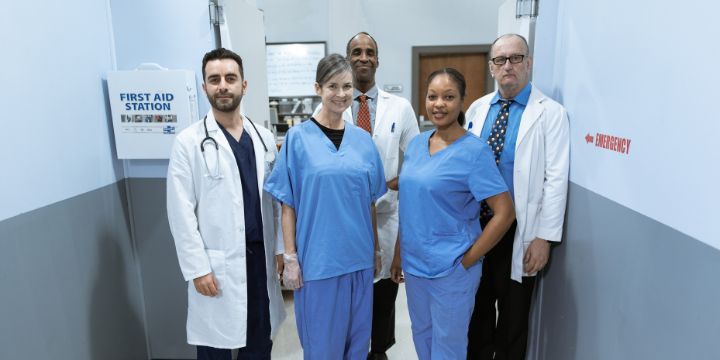
Wait — There’s No “MBBS” in the USA. Here’s What That Actually Means for You
This is the first thing that trips students up, and it’s more consequential than it sounds.
In the USA, there is no standalone MBBS degree. The country follows a combined MBBS/MD pathway, which means students pursue an MD (Doctor of Medicine) after first completing an undergraduate degree. So if you’re coming straight from 10+2 dreaming of walking into a US medical school the way you’d walk into an Indian one that’s not how it works.
Here’s the actual route: you complete a pre-medical undergraduate degree (typically 3–4 years), appear for the MCAT (Medical College Admission Test), then apply to MD programs that run for another 4 years, followed by a residency. The complete process takes around 7 to 9 years, including 3–4 years of a BSc and 4 years of the MD program, followed by 12 months of mandatory internship.
Why does this matter for scholarships? Because it changes when and what you apply for. Most scholarship cycles align with MD program admissions, not undergraduate entry. Students who apply early, during their pre-med years, have a different set of funding options than those applying to the MD directly. Knowing this helps you plan your scholarship strategy in phases not as a single, one-time application.
The Real Cost Barrier (And Why It Makes Scholarships Non-Negotiable)
Here’s a number that puts things into perspective: the total cost of medical education in the USA can range from $40,000 to $70,000 per year that’s approximately ₹37–65 lakhs annually. Over four years of an MD program alone, you’re looking at somewhere between ₹1.5 crore and ₹2.5 crore in tuition alone, before living expenses.
This isn’t meant to scare you. It’s meant to clarify why scholarships aren’t a “nice to have” they’re structurally essential for most international students, particularly Indian students who don’t qualify for federal student aid in the US.
What’s interesting, though, is that the funding landscape is far more layered than most guides acknowledge. Beyond the usual Fulbright mention, there are institutional scholarships, government-backed endowments, healthcare-specific awards, and even pre-med research fellowships that many students completely overlook during the undergraduate phase.
The Scholarship Landscape: What’s Actually Available
Let’s break this down honestly.
Fulbright The Big Name (With Important Caveats)
The Fulbright program is one of the few globally recognised scholarships that can be used for MBBS-equivalent MD programs in the USA, subject to approval. Fulbright funding is awarded only after confirmation of admission to a recognised US medical school, and it is typically used to offset living expenses and part of tuition, making it highly relevant for MD students.
It’s prestigious. But it doesn’t fully fund an MD. Think of Fulbright as a credibility booster and a partial financial bridge — not a complete solution.
Inlaks Shivdasani Foundation — Underused by Medical Students
The Inlaks Shivdasani Foundation supports Indian students pursuing high-cost professional degrees, including medicine, at top-ranked global institutions. This scholarship is most effective for Indian students admitted to elite US medical schools where MD tuition costs are exceptionally high.
Most students applying for this scholarship come from humanities, arts, or social sciences backgrounds. Medical students who apply often have an edge simply because fewer of them do. If you’re aiming at a top-10 US medical school, this is a scholarship worth dedicating serious time to.
JN Tata Endowment — The Credible Supplementary Fund
The JN Tata Endowment is widely used by Indian students pursuing medical and healthcare degrees abroad, including MD programs in the USA. While the amount is limited, it directly supports MBBS-equivalent medical education and strengthens overall funding credibility.
Think of JN Tata not as your primary funder but as a signal to universities and other scholarship committees that your application has depth. Stacking multiple partial scholarships is often more realistic than landing one full ride.
MPOWER Global Citizen Scholarship — The International Student’s Advantage
The MPOWER Global Citizen Scholarship is specifically designed for international students in high-impact fields such as medicine. Because it excludes US and Canadian citizens, it is one of the few awards where being an international student is a primary requirement rather than a barrier.
This one deserves more attention. Most competitive scholarships treat international status as a disadvantage. MPOWER flips that. If you’re an Indian student going into medicine, you’re exactly who this scholarship was designed for.
The Pre-Med Phase: Where Most Students Miss the Funding Window
Here’s something most blog posts skip entirely: the pre-med undergraduate years are a scholarship opportunity in themselves, and they directly build the profile that wins you funding at the MD level.
The NIH Undergraduate Scholarship Program (UGSP) provides up to $20,000 per year to students with exceptional financial need pursuing careers in biomedical research. Scholarships are awarded for one year and can be renewed up to four years. After each year of scholarship support, scholars train for 10 weeks as paid summer research employees in an NIH research laboratory, and after graduation, they continue training as full-time employees in an NIH research lab.
This is remarkable for two reasons. First, it gives you direct NIH lab experience, which makes your MD application dramatically stronger. Second, it establishes a research publication trail — the single most overlooked factor in competitive medical school admissions.
The student who enters MD applications with an NIH research credit, even a minor co-authorship, stands in a completely different category from one who has only coursework and volunteering.
What Actually Gets You Funded: The Profile That Works
A strong overall profile is essential for securing scholarships for MBBS in USA. This includes clinical exposure such as internships and hospital volunteering, participation in research projects or publications, leadership roles, community service or healthcare initiatives, well-written Statements of Purpose (SOPs), and strong Letters of Recommendation (LORs).
Let’s go deeper on a few of these, because the surface-level advice misses what committees actually look for.
On research publications: A co-authored paper in a small peer-reviewed journal beats a list of 15 extracurricular certificates. One real contribution to medical knowledge — even a literature review published under a professor’s guidance — signals that you understand what scientific medicine actually is.
On clinical experience: Volunteering at a government hospital in India counts. In fact, it often counts more than a polished internship at a private hospital, because it shows you’ve seen the full spectrum of patient reality — not curated medicine. Scholarship committees at institutions like Johns Hopkins actually value this kind of global health exposure.
On your SOP: The single biggest mistake students make is writing an SOP about wanting to be a doctor. Everyone applying wants to be a doctor. Write about a specific patient encounter, a research question you couldn’t stop thinking about, or a structural problem in healthcare that you want to solve. Specificity is what creates memory in a reader’s mind.
The NEET Question — And the Real Story on Recognition
Qualifying for the NEET examination is mandatory for all Indian residents who want to practice medicine in India after studying MBBS abroad. However, some universities in the USA offer MBBS programs without NEET requirements, such as Harvard Medical School, Penn Med, Stanford Medicine, and Yale School of Medicine.
The more useful clarification: students who study MBBS in the USA and want to practice in India are not required to give any NMC Screening Test. This is a significant advantage over graduates from many other countries. If your plan is to return to India after your MD, you’re not walking into a bureaucratic maze — you’re walking into a relatively clear pathway.
The Doctor Shortage Factor — Why the USA Actually Wants You
This is the strategic context that makes the entire investment make sense.
There is a shortage of 86,000 doctors according to an AAMC report, and there will be an increase in specialisations of psychiatrists, obstetricians, neurologists, radiologists, anesthesiologists, paediatricians, and cardiologists by 2032.
What this means in practical terms: residency spots are becoming more competitive, but the underlying demand for trained physicians is structurally growing. Students who enter high-need specialisations — particularly psychiatry, neurology, and primary care in underserved areas — often find both strong residency placements and additional loan forgiveness or scholarship programs tied to service commitments.
There’s a programme called the National Health Service Corps (NHSC) Scholarship that covers medical school costs in exchange for a commitment to practise in underserved communities after graduation. It’s not widely covered in the Indian student guides — but it’s real, it’s well-funded, and it could change your financial equation entirely if you’re genuinely interested in community medicine.
Building Your Application: A Phased Approach That Actually Works
Rather than the typical “do your MCAT and apply” advice, here’s a more structured phase plan.
Phase 1 — Pre-Med Years (Year 1–3 of undergraduate)
Focus on: GPA above 3.5, one serious research involvement, MCAT prep beginning in Year 2, NEET qualification, volunteer clinical hours. Start identifying scholarship deadlines now — not when you’re applying to MD programs.
Phase 2 — MD Application Year
Most scholarships require students to first secure admission into a recognised program before applying. This means your AMCAS application (the centralised US medical school application system) comes first. Once you have an acceptance or shortlisting, your scholarship applications become dramatically stronger.
Phase 3 — First Year of MD
Apply for institutional grants, NIH training awards, and healthcare-specific fellowships. Medical students enrolled in an MD/PhD program are eligible for individual NIH fellowship support through mechanisms like the F30 award. If you’re interested in research alongside clinical training, the dual MD/PhD pathway — where tuition is often fully funded — is worth serious consideration.
One Last Thing: The Math Only Works If You Stay Honest About It
The students who successfully pursue MBBS in USA with scholarships are not necessarily the most brilliant. They’re the most intentional. They start early, they apply widely, they combine partial scholarships rather than waiting for one full ride, and they treat the application as a craft rather than a form.
Meeting eligibility criteria does not guarantee a scholarship, but it significantly improves your chances. Applying across multiple platforms is essential to improve the chances of securing financial support.
The US medical system is genuinely one of the finest in the world. The clinical exposure, the research culture, the residency infrastructure — these are not marketing lines. They’re real advantages that compound over a career. But the path requires you to be strategic about money from Day 1, not as an afterthought.
Start your research now. Build your profile with intention. And don’t wait for the perfect scholarship — build the profile that multiple scholarships want to fund.
Looking for more guidance on studying medicine abroad? Explore our related posts on MCAT preparation strategies, pre-med course selection, and how to write a medical school SOP that actually gets read.